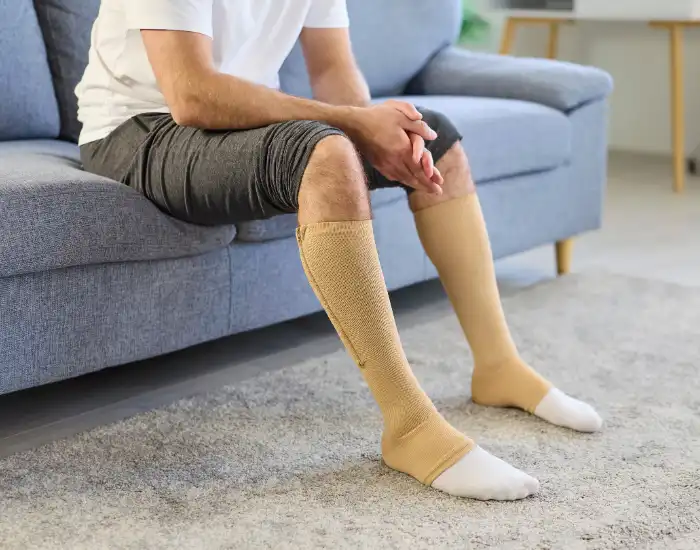
Varicose veins are a common medical condition that affects blood circulation in the legs. They occur when vein valves weaken and blood begins to pool instead of flowing efficiently back to the heart. As a result, patients may notice symptoms such as heaviness, swelling, visible veins, and discomfort.
In everyday clinical practice, compression socks and varicose veins are often discussed together. This is because compression socks are widely used to help manage symptoms associated with varicose veins. However, it is important to clearly understand that compression socks do not cure varicose veins. Instead, they provide external support that improves blood flow and reduces discomfort.
Therefore, the relationship between compression socks and varicose veins is primarily supportive, not curative. This article explains how they are connected, what causes varicose veins, how symptoms develop, and when medical care is needed.
Table of Contents
- Understanding Varicose Veins
- How Compression Socks Work
- Causes of Varicose Veins
- Symptoms of Varicose Veins
- How Compression Socks Help Symptoms
- Who Should Use Compression Socks
- Diagnosis and Medical Evaluation
- Treatment Options for Varicose Veins
- Lifestyle Changes and Prevention
- When to Seek Medical Care
- Clinic-Based Evaluation – Round Rock Primary Care
- FAQs
- Final Thoughts
Understanding Varicose Veins
To understand compression socks and varicose veins, it is important to first understand what varicose veins are.
Varicose veins develop when the small valves inside veins stop working properly. Normally, these valves keep blood moving upward toward the heart. However, when they weaken, blood flows backward and collects in the veins.
Over time, this causes the veins to stretch, enlarge, and become visible under the skin. Most commonly, this condition affects the legs because they carry the most pressure from standing and walking.
In many cases, patients first notice mild discomfort, and then symptoms gradually worsen if circulation is not supported. This is where compression socks and varicose veins management becomes relevant in early care.
How Compression Socks Work
Compression socks are specially designed medical garments that apply controlled pressure to the legs. Unlike regular socks, they are tighter around the ankle and gradually loosen toward the knee or thigh.
This pressure pattern is important because it actively supports blood flow. As a result, blood moves more efficiently upward toward the heart.
In simple terms, compression socks:
- Improve circulation
- Reduce blood pooling
- Support weakened vein walls
- Help decrease swelling
Therefore, the connection between compression socks and varicose veins is based on improving circulation rather than treating vein damage itself.
Causes of Varicose Veins
Varicose veins develop slowly over time. Several factors increase the risk of developing this condition. First, aging plays a major role because vein walls naturally lose strength as people get older.
In addition, family history also matters. If close relatives have varicose veins, the risk increases significantly.
Furthermore, lifestyle factors contribute strongly. For example:
- Standing or sitting for long hours reduces blood movement
- Lack of exercise slows circulation
- Excess body weight increases pressure on leg veins
Pregnancy can also increase risk due to hormonal changes and increased pressure on pelvic veins.
As these factors combine, they often lead to symptoms where compression socks and varicose veins become part of daily symptom management discussions.
Symptoms of Varicose Veins
The symptoms of varicose veins can vary from mild to severe. Initially, many patients notice visible veins that appear blue or purple under the skin.
As the condition progresses, symptoms may include:
- A heavy feeling in the legs
- Aching or throbbing pain
- Swelling around the ankles
- Burning or itching sensations
- Muscle cramps, especially at night
In addition, symptoms often worsen after long periods of standing or sitting. Many patients report relief when they elevate their legs or use compression socks.
At this stage, compression socks and varicose veins are often linked in symptom control because compression socks help reduce discomfort.
How Compression Socks Help Symptoms
Compression socks play an important role in managing symptoms of varicose veins. First, they apply steady pressure to the legs. Then, this pressure helps veins push blood upward more efficiently.
As a result, patients often experience:
- Reduced swelling
- Less leg fatigue
- Improved comfort during daily activities
- Decreased aching sensation
However, it is important to understand that compression socks do not repair damaged veins. Instead, they support circulation and help control symptoms.
Therefore, compression socks and varicose veins should always be seen as a management strategy rather than a cure.
Who Should Use Compression Socks
Compression socks are not required for everyone. However, they are often recommended for people who experience mild to moderate varicose vein symptoms.
For example, individuals who stand for long hours at work may benefit from daily use. Similarly, people with early signs of vein problems may use them to prevent symptom progression.
Pregnant individuals may also be advised to use compression socks due to increased pressure on leg veins.
In all these cases, compression socks and varicose veins management helps improve daily comfort and circulation support.
Diagnosis and Medical Evaluation
Proper diagnosis is important before starting any treatment plan. A healthcare provider begins by reviewing symptoms and medical history.
Next, a physical examination is performed to check visible vein changes. If needed, an ultrasound test may be recommended to evaluate blood flow and valve function.
This step is important because it helps determine how severe the varicose veins are and whether compression socks and varicose veins management alone is sufficient or if additional treatment is required.
Treatment Options for Varicose Veins
Treatment depends on severity. In mild cases, lifestyle changes and compression socks may be enough to control symptoms.
However, in moderate to severe cases, additional treatments may be required.
Compression Therapy
Doctors often recommend compression socks first. They help reduce swelling and improve circulation.
Lifestyle Adjustments
Patients are encouraged to stay active, avoid long sitting periods, and maintain a healthy weight.
Medical Procedures
If symptoms worsen, medical procedures may include:
- Sclerotherapy (vein injections)
- Laser treatment
- Radiofrequency ablation
Even after procedures, doctors may still recommend compression socks and varicose veins management during recovery.
Lifestyle Changes and Prevention
Patients can take several steps to reduce symptom progression. First, they should stay physically active. Walking and light exercise improve blood flow in the legs.
In addition, patients should avoid sitting or standing for too long without movement. Simple leg stretches can also help circulation.
Maintaining a healthy weight reduces pressure on leg veins. Furthermore, elevating the legs after long activity helps reduce swelling.
When combined, these habits support long-term management of compression socks and varicose veins symptoms.
When to Seek Medical Care
Although varicose veins are often not dangerous, certain symptoms require medical attention.
Patients should seek care if they notice:
- Severe or persistent leg pain
- Sudden swelling in one leg
- Skin discoloration or ulcers
- Bleeding from veins
- Signs of infection such as redness or fever
Importantly, if symptoms worsen over time, patients should not rely only on compression socks. Instead, they should seek professional evaluation for proper management of varicose veins.
Clinic-Based Evaluation – Round Rock Primary Care
Round Rock Primary Care provides evaluation and management for patients experiencing symptoms related to varicose veins and circulation concerns. The clinic supports both walk-in and appointment-based visits, including hypertension consultations and general primary care services. Insurance coverage is accepted to ensure accessible care for patients. The clinic is located at 3000 Joe Dimaggio Blvd, Suite 65, Round Rock, TX 78665. Patients experiencing symptoms related to compression socks and varicose veins from surrounding communities such as Round Rock, Brushy Creek, Hutto, Pflugerville, Wells Branch, Windemere, Forest Creek, Teravista, Paloma Lake, Stone Oak, North Austin, and Jollyville commonly seek evaluation and ongoing care.
FAQs
1. Do compression socks cure varicose veins?
No. They help manage symptoms but do not remove varicose veins.
2. How often should compression socks be worn?
They are usually worn during the day and removed at night unless advised otherwise.
3. Can compression socks prevent varicose veins?
They may reduce risk in high-risk individuals but cannot fully prevent the condition.
4. Are compression socks safe for long-term use?
Yes, they are generally safe when properly fitted.
5. When should I see a doctor for varicose veins?
You should seek care if pain, swelling, or skin changes worsen.
Final Thoughts
Varicose veins are a common circulation condition that can affect daily comfort and mobility. Compression socks play an important supportive role in reducing symptoms, improving blood flow, and enhancing quality of life.
However, it is essential to remember that compression socks and varicose veins are connected through symptom management, not disease cure. Therefore, persistent or worsening symptoms should always be evaluated by a healthcare professional for proper diagnosis and treatment.
Medical Disclaimer: This article is for educational purposes only and does not replace professional medical advice, diagnosis, or treatment. Always consult a qualified healthcare provider for personalized guidance regarding varicose veins or related conditions.